
Search Missouri Deed Records
Missouri deed records are kept at the county level by the Recorder of Deeds in each of the state's 114 counties. These offices hold warranty deeds, quit claim deeds, deeds of trust, releases, plats, and surveys for all real property in their area. You can search Missouri deed records in person at the local courthouse, through online portals run by county recorders, or by using the Missouri State Archives for historical land documents dating back to the 1700s. Each county sets its own search tools and hours, so the process can vary from one place to the next.
Missouri Deed Records Quick Facts
Where to Find Missouri Deed Records
The Recorder of Deeds in each Missouri county is the main source for deed records. This office records and stores all real estate documents for land in that county. You can visit the recorder's office at the courthouse during business hours to look up deeds, get copies, or file new documents. Most offices are open Monday through Friday. Staff can help you find what you need by name, book and page number, or legal description of the property.
Missouri law spells out who handles these records. Under RSMo Chapter 59, county recorders must keep indexes of all recorded instruments. They use a Direct Index sorted by grantor (seller) and an Indirect Index sorted by grantee (buyer). Each entry shows the names of the parties, date filed, volume and page where recorded, type of instrument, and a description of the property. This index system makes it possible to trace the full chain of title for any piece of land in Missouri.
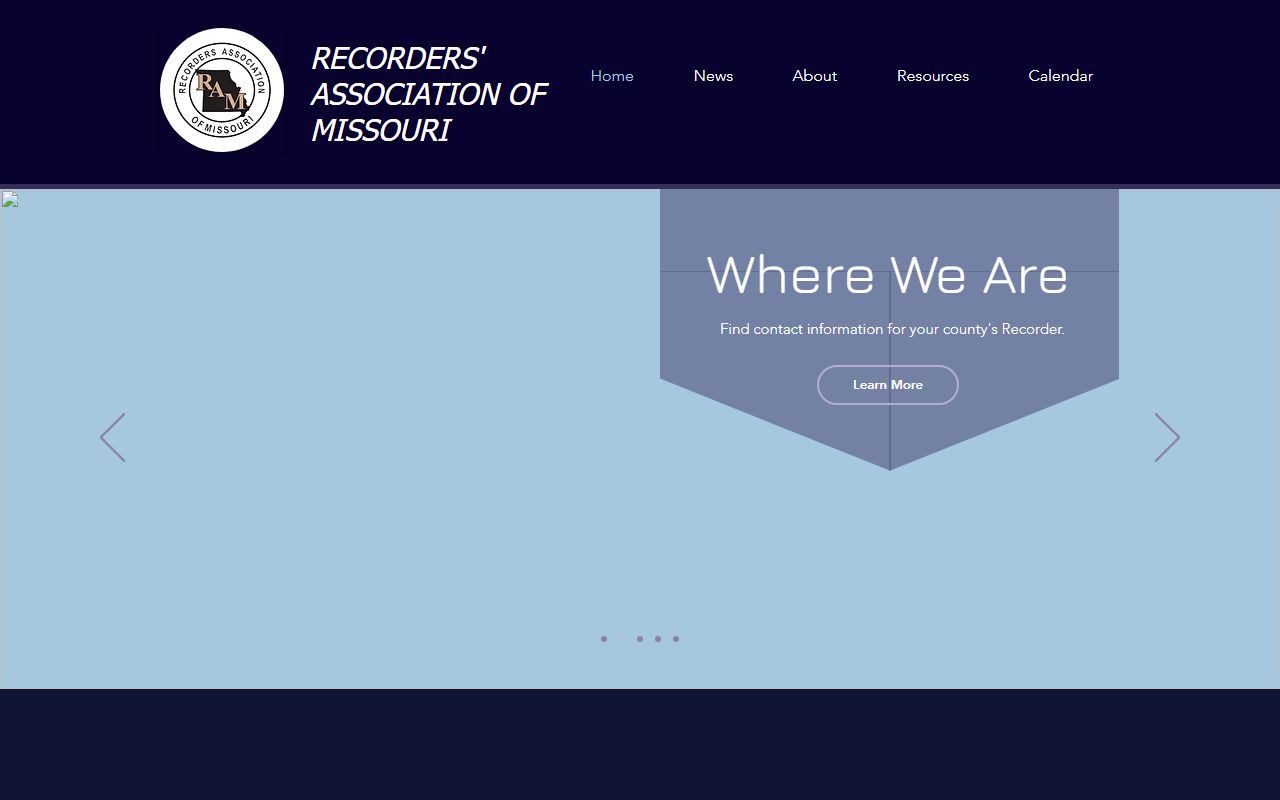
The Recorders' Association of Missouri supports all 114 county recorder offices across the state. RAM was founded in 1984 to help train recorders on recording law and best practices. Their site has a county map, contact information for every recorder office, recording guidelines, and document formatting standards. If you need to find the right office for a specific county, RAM is a good place to start.
Note: Per RSMo 59.003, all requests for deed records dated after December 31, 1969 must go to the county recorder where the document was originally recorded.
How to Search Deed Records in Missouri
Many Missouri counties now offer online search tools for deed records. Over 90 counties accept electronic recordings, and several provide web-based portals where you can look up recorded documents from a computer or phone. The type of system varies by county. Some use vendors like Fidlar Technologies or iCounty Technologies. Others have built their own search pages. Coverage dates differ too. Some go back decades while others only have recent records online.
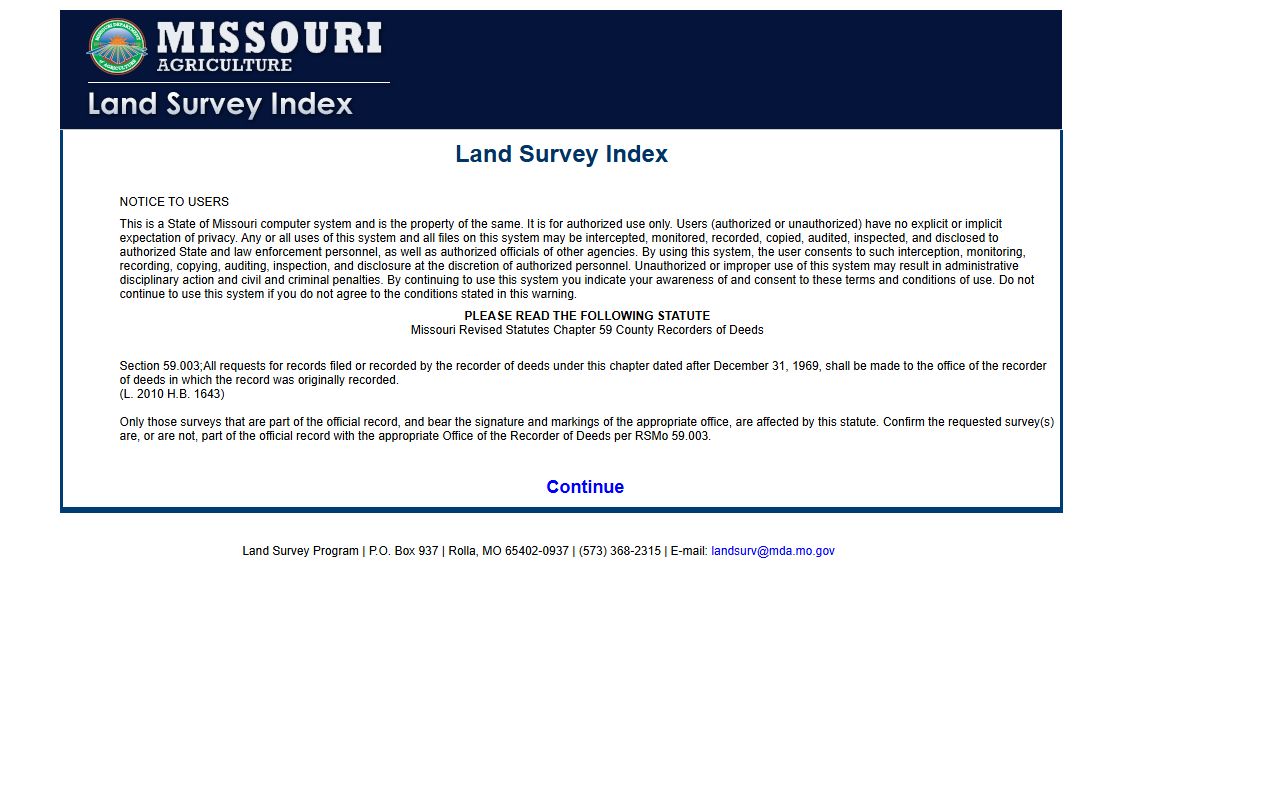
The Missouri Land Survey Database is a state system that gives access to land surveys that are part of the official record. It covers surveys filed with county recorders across Missouri. This can be useful when you need to verify a legal description or find the boundaries of a specific parcel. The system is run by the Missouri Department of Agriculture and is free to use.
For older records, the Missouri State Archives maintains historical land records dating from French and Spanish land grants in the 1790s through 1969. The Archives holds deeds, plat books, surveyor records, and more than 35,500 transcribed land patents. You can search their Land Patents Database online by name, county, or date of purchase. This is a key resource for genealogy research or tracing very old property ownership in Missouri.
To search deed records in Missouri, you will typically need:
- Name of the grantor or grantee
- County where the property is located
- Approximate date of the transaction
- Book and page number if you have it
- Legal description of the property
In-person visits are still a solid option. County recorder offices have public search stations where you can look through records yourself. Some counties, like Caldwell County, have two public search stations available during office hours. Staff at these offices can also pull documents for you and make copies on the spot. Call ahead to check hours and what forms of payment they take.
Types of Missouri Deed Records
Missouri recorders handle several types of real estate documents. Each one serves a different purpose in a property transaction. The most common are warranty deeds and quit claim deeds, but the full list is much longer. Here is what you may find at a Missouri recorder's office.
A warranty deed transfers property with a full guarantee that the seller holds clear title. This is the most common type used in home sales. A quit claim deed transfers whatever interest the seller has, but it makes no promise about the quality of that title. People often use quit claim deeds between family members or to clear up title issues. Sheriff's deeds come from court-ordered sales, like foreclosures or tax sales. Guardians' deeds and administrators' deeds handle property transfers for people under guardianship or from estates of people who have died.
Missouri also recognizes Transfer on Death deeds, sometimes called beneficiary deeds. Under RSMo 461.025, a TOD deed lets you name someone to receive your property when you die, without going through probate. The deed must include a legal description of the property, name at least one beneficiary, and be recorded with the county recorder before the owner's death. The owner keeps full control of the property during their lifetime and can revoke the deed at any time by recording a revocation. Lady bird deeds are not recognized in Missouri.
Deeds of trust work like mortgages in Missouri. They involve three parties: the borrower, the lender, and a trustee. The trustee holds the title until the loan is paid off, then files a release. If the borrower defaults, the trustee can sell the property through foreclosure. All of these documents get recorded with the county Recorder of Deeds. Releases, assignments, and other related papers are also filed there.
Note: Under RSMo 59.310, all deeds must include the grantor and grantee names, legal description, and grantee mailing address on the first page to be accepted for recording.
Missouri Deed Records Fees
Recording fees in Missouri are set by state law. The base cost to record a standard real estate document is $24 for the first page and $3 for each additional page. These fees apply across all 114 counties. If a document does not meet the formatting standards in RSMo 59.310, the recorder can charge an extra $25 non-standard penalty on top of the regular fee.
Plat recordings cost more. An 18" x 24" plat costs $44 for the first page and $25 for each additional page. Larger 24" x 36" plats start at $69. Survey recordings are cheaper: $24 for the first 18" x 24" page. Copy fees run about $1 per page for uncertified copies. Certified copies cost a bit more, usually an extra $1 to $3 for the certification.
Part of every recording fee goes to state funds. The Local Records Preservation Fund gets $1. The Missouri Land Survey Fund gets $1. The Missouri Housing Trust Fund gets $3. The Statutory County Recorder's Fund also gets a share. These fees help pay for record preservation and land survey maintenance across the state. Checks are usually made payable to the county recorder, and many offices now accept credit cards (with a convenience fee).
Deed Records Document Standards
Missouri has strict formatting rules for documents you want to record. These rules took effect on January 1, 2002 under RSMo 59.310. Every document must be on 8.5" x 11" white or light-colored paper that weighs at least 20 pounds. No watermarks or logos are allowed. Print must be in black or dark ink, at least 8-point type, on one side only.
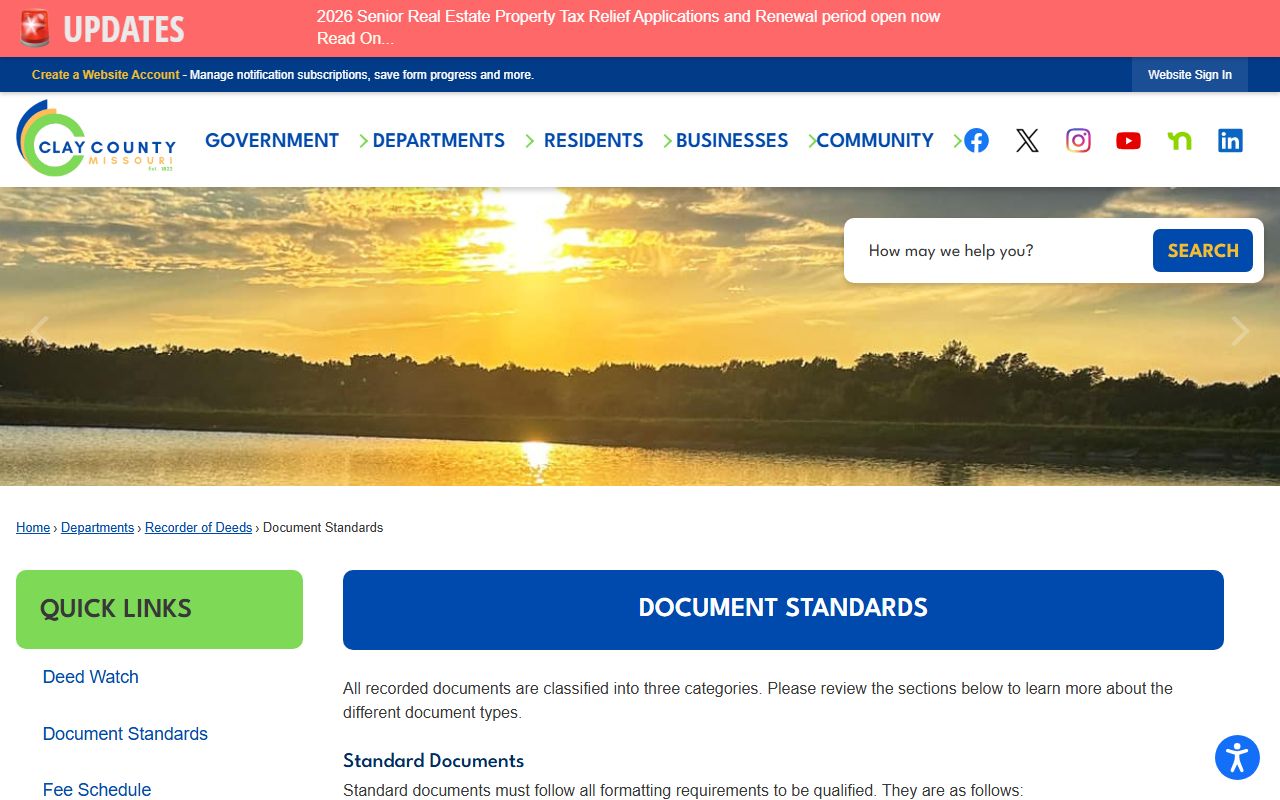
The first page has extra rules. You need a 3-inch blank top margin for the recording certificate. The first page must also show the title of the document, the date, all grantor names and marital status, all grantee names, statutory addresses, the full legal description, and any reference book and page numbers. Other margins must be at least 3/4 inch. Signatures must be in black or dark ink with the name typed or printed underneath. Every deed needs a notary acknowledgment with a valid seal that meets the requirements in RSMo Chapter 486.
Some documents are exempt from these standards. That includes documents signed before January 1, 2002, military separation papers, documents executed outside the United States, certified copies of birth or death certificates, and certain court judgments. If your document does not meet standards and is not exempt, the recorder can still accept it but you will pay the $25 penalty fee.
Electronic Recording of Deed Records
Missouri counties began accepting electronic recordings in 2006. Today, more than 90 counties have e-recording set up. Under RSMo 59.563, recorders can accept documents in electronic format. E-recording lets title companies, attorneys, and other professionals submit documents online and get them recorded in as little as five minutes.
Several vendors handle e-recording in Missouri. iCounty Technologies is based in Blue Springs and works with many counties. Simplifile, CSC, EPN, and Indecomm Global are also active. Most vendors charge no sign-up or maintenance fees. You can submit warranty deeds, quit claim deeds, deeds of trust, releases, assignments, and most other standard real estate documents electronically. Payment usually goes through ACH. E-recording is not required, and some smaller counties still only accept paper documents in person or by mail.
Missouri Deed Records Fraud Alerts
Property fraud is a growing concern. The FBI has called property and mortgage fraud one of the fastest-growing white-collar crimes. Many Missouri counties now offer free Property Fraud Alert services. These systems send you an email when a document is recorded that matches your name or property. The service does not stop fraud from happening. But it gives you an early warning so you can act fast.
Counties like McDonald County, Audrain County, and Stone County use services like deedwatch.com for this. Some counties also offer Notary Fraud Alerts that monitor a notary's name and commission number in land records. Registration is free in most counties. If you own property in Missouri, signing up for a fraud alert in your county is a smart step to protect your deed records.
Are Missouri Deed Records Public
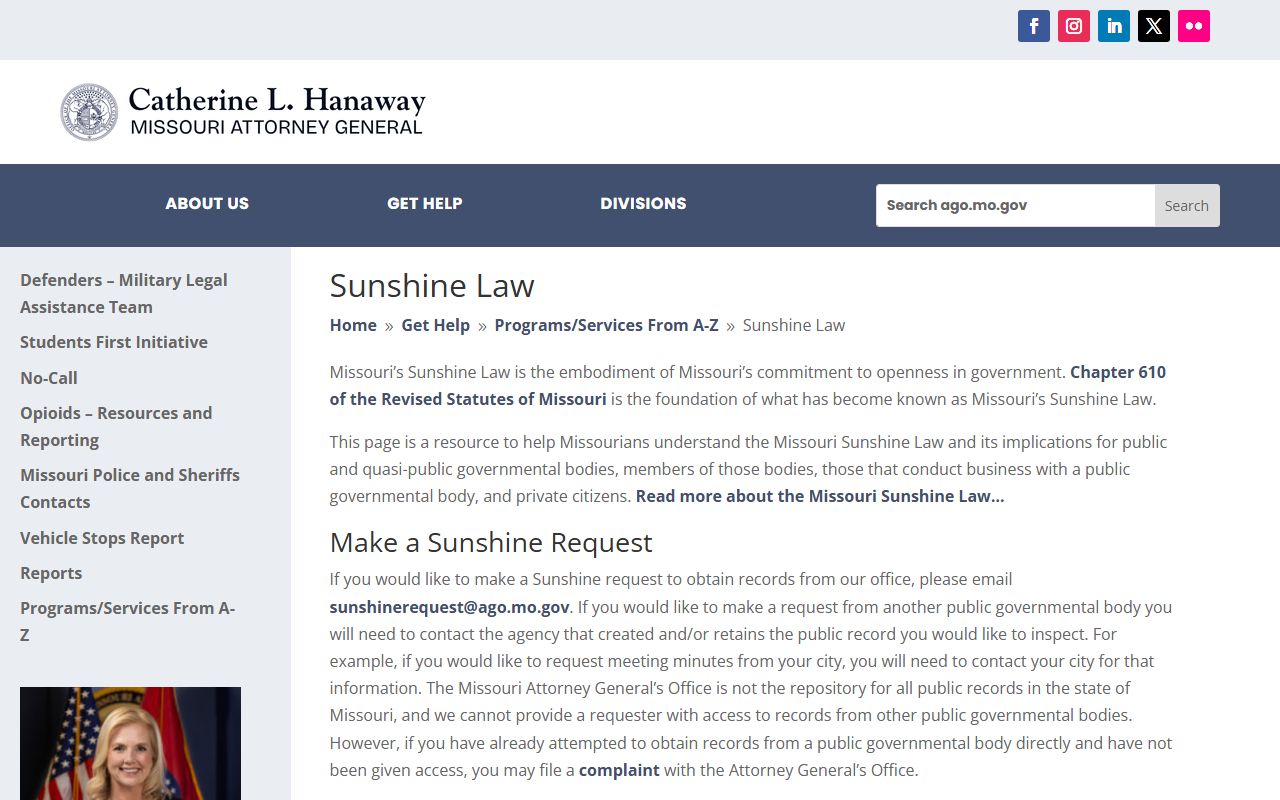
Yes. Deed records in Missouri are public records. The Missouri Sunshine Law under RSMo Chapter 610 gives the public the right to inspect and copy government records. County recorders must provide proper facilities for examining records during normal business hours. You do not need to state a reason for your request. Anyone can walk into a recorder's office and look up deed records.
The State Historical Society of Missouri and the Missouri Digital Heritage program also provide public access to historical land records. The Historical Society has research centers in Columbia, Kansas City, St. Louis, and Rolla with collections of family papers, county histories, and atlases that include property deeds. Missouri Digital Heritage offers online access to land records from 1777 through 1969, including French and Spanish colonial documents. Both are free to use for research.
Missouri Deed Records and UCC Filings
Uniform Commercial Code filings in Missouri are split between the state and county levels. The Secretary of State's office handles most UCC filings as the centralized filing office for personal property liens. There are about 1,188,609 business entities registered in Missouri. The Secretary of State has branch offices in Kansas City, St. Louis, and Springfield.
County recorders only accept UCC filings for fixtures, standing timber, and as-extracted collateral. All other UCC filings go to the Secretary of State. A paper UCC-1 financing statement costs $17, plus $1 per page for attachments. Online filings are $10 each plus a convenience fee. UCC filings last five years and can be renewed by filing a continuation statement. You can file online at sos.mo.gov/ucc around the clock. Lien searches through the Department of Revenue can also show tax liens filed with the recorder of deeds that attach to real and personal property.
Browse Missouri Deed Records by County
Each of Missouri's 114 counties has its own Recorder of Deeds office. Pick a county below to find local contact details, fees, online search tools, and resources for deed records in that area.
Deed Records in Major Missouri Cities
Property owners in Missouri cities file deed records with their county Recorder of Deeds. Pick a city below to learn which county handles recordings for that area and how to search local deed records.